
We value keeping your teeth healthy and your smile free from pain. Teeth grinding can cause severe jaw pain and wear down your teeth over time. With Dr. Martin’s 2000+ hours of post-residency experience, he can help you find solutions to your tooth grinding.
Our consultations are thorough and will allow us to discuss your goals for treatment and get to know our team. Call us for a TMJ or bruxism consultation in Lafayette, CO.

Understanding Bruxism
Bruxism is the term for chronic teeth grinding. It most commonly happens at night, but it can happen during the day, especially in times of stress. If left untreated, it can cause severe damage to your gums, teeth, and jaw. You may experience:
- Gum recession
- TMJ pain
- Worn or cracked teeth
- Headaches
- Shifting teeth
However, there are simple solutions for teeth grinding. Dr. Martin offers a comprehensive approach to your smile and can help you treat the underlying cause of your bruxism and prevent it from damaging your smile.
What Causes Bruxism?
Several factors may contribute to this condition. Sleep apnea is a common link, as interruptions in breathing during sleep can cause your jaw to clench. TMJ disorders can also play a role, since jaw misalignment or joint dysfunction may cause grinding as your body tries to find a more comfortable bite position. Stress and anxiety are frequent contributors as well, with many people unconsciously grinding their teeth when they feel tense.
Other potential causes include:
- An abnormal bite
- Missing or crooked teeth
- Lifestyle habits like alcohol or caffeine consumption
- Certain medications
Because bruxism can develop from a combination of issues, it’s important to identify the underlying cause before deciding on treatment.
The Connection Between Teeth Grinding and TMJ Issues
We take TMJ discomfort and TMD seriously at our office, as we understand how difficult pain can be to manage. TMD, which is when you have dysfunction or pain in your jaw, can cause bruxism, but bruxism can also cause jaw pain. Our KOIS Center bite study and custom mouth guards can help reposition your jaw to alleviate TMD and bruxism together.
During our thorough consultations and regular exams, we will check for signs of TMJ dysfunction as well as signs of bruxism, where your teeth may be worn down in certain areas. Visit our TMJ page to learn more.
The Connection Between Teeth Grinding and Sleep Apnea
Tooth grinding can also be a sign of sleep apnea. If you are struggling to get enough air as you sleep, your jaw can clench or grind.
Treating sleep apnea with our custom oral appliances can lessen how often you grind your teeth throughout the night. If you are grinding your teeth and find that you aren’t getting quality sleep, sleep apnea treatment can help.
Visit our sleep apnea page to learn more.
Manage Sleep Apnea and Bruxism with One Treatment
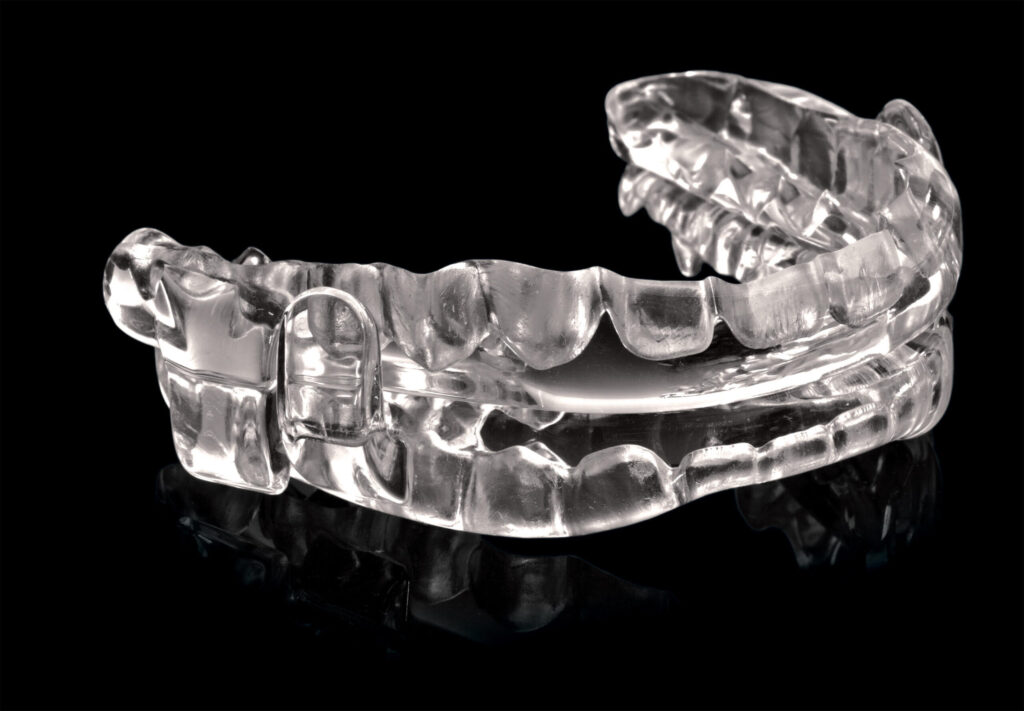
A mouth guard can manage sleep apnea and bruxism at the same time by improving the position of your jaw while also protecting your teeth from the damage caused by grinding and clenching.
Custom oral appliances are designed to gently guide your lower jaw forward during sleep, which helps keep your airway open and allows you to breathe more comfortably throughout the night. When your airway stays open, your body does not have to struggle for oxygen, which can reduce interrupted sleep and improve how rested you feel during the day.
At the same time, this repositioning helps reduce the pressure placed on your jaw joints and facial muscles. Many patients who grind their teeth at night do so because their jaw is not resting in a stable position. By guiding the jaw into a more natural alignment, a mouth guard can decrease muscle tension and reduce the urge to clench or grind while you sleep.
In addition to repositioning the jaw, the appliance creates a protective barrier between your upper and lower teeth. This prevents enamel from wearing down and helps protect dental work such as crowns, veneers, and restorations from excessive force. Over time, this protection can help preserve your bite, reduce sensitivity, and prevent damage that may otherwise require restorative treatment.
What You Can Do at Home to Help with Bruxism
Bruxism, or teeth grinding and clenching, often happens during sleep, but it can also occur during the day without you realizing it. While professional treatment, such as a custom night guard, can provide the most reliable protection, there are several things you can do at home to reduce grinding and relieve tension in your jaw.
These habits can help protect your teeth and support the work we do at our office.
- Be Aware of Daytime Clenching | Many patients grind their teeth at night because they clench during the day. Pay attention to whether your teeth are touching when you are not eating. Your teeth should normally rest slightly apart, with your tongue relaxed and your lips closed.
- Reduce Stress Before Bed | Stress and muscle tension are common causes of bruxism. Relaxing before sleep with stretching, reading, or breathing exercises may help your jaw muscles stay relaxed at night. Avoid stimulating activities right before bed when possible.
- Limit Caffeine and Alcohol in the Evening | Caffeine and alcohol can increase muscle activity during sleep, which may make grinding worse. Try to avoid coffee, energy drinks, and alcohol later in the day if you notice increased jaw soreness in the morning.
- Use Warm Compresses for Jaw Tension | Applying a warm compress to the sides of your face before bed can help relax the muscles around your jaw. This may reduce tightness and make it easier for your jaw to rest in a comfortable position overnight.
Protect Your Teeth with a Custom Mouth Guard
One way we can protect your teeth, especially while you sleep, is by providing a custom night guard, or mouth guard. These are worn to prevent your teeth from grinding together at night, and can also reposition your jaw if jaw misalignment is causing your bruxism.
Our mouth guards are custom-made using digital impressions, so you can avoid the mess of plastic impressions. We will also analyze your bite using our KOIS Center bite study technology, so your mouth guard is the most effective.
Frequently Asked Questions About Bruxism
How do I know if I grind my teeth at night?
Many people are unaware that they grind their teeth because it often happens during sleep. Signs may include waking up with jaw soreness, tooth sensitivity, headaches, or tight facial muscles. A dental exam can often reveal wear patterns that indicate grinding.
Can bruxism go away on its own?
In some cases, grinding may improve if the cause is temporary, such as short-term stress. However, many patients continue to grind their teeth without realizing it, which can lead to long-term damage if it is not addressed.
How long does it take to get used to a mouth guard?
Most patients adjust to a custom mouth guard within a few nights. Because it is made specifically for your bite, it should feel secure and comfortable once you become familiar with wearing it.
Will treating bruxism help with headaches or facial tension?
It can. When grinding places stress on the jaw muscles and joints, it may contribute to headaches, facial soreness, or tightness. Reducing that pressure can often improve overall comfort.
Do I need treatment even if my symptoms seem mild?
Even mild grinding can slowly wear down teeth. Early treatment helps prevent damage and keeps your bite stable.
Let Us Help Your Health
Bruxism can have permanent consequences for your health. If you are looking for a comprehensive approach to treating your bruxism, look no further than James Martin, DMD. We treat the underlying cause of your tooth grinding and prevent damage to your smile. Contact us to schedule an exam or a new patient consultation.
Schedule AppointmentAbout Dr. Martin
Dr. James Martin earned his Doctor of Dental Medicine degree from Boston University in 2011 before completing a one-year General Practice Residency at Lutheran Medical Center in Brooklyn, New York. Committed to providing the highest standard of care, he completes more than 200 hours of continuing education each year and is Kois-trained in advanced diagnosis, treatment planning, aesthetics, and long-term oral health. Dr. Martin is also a Fellow of the American Academy of Implant Dentistry (FAAID) and a Diplomate of the American Board of Oral Implantology/Implant Dentistry (DABOI/ID)—two of the profession’s most respected credentials in implant dentistry. By combining advanced training, modern technology, and personalized care, Dr. Martin helps patients achieve healthy, beautiful, and lasting smiles.

What Our Patients Are Saying
Darrell C.

“As a medical provider myself, I am quite impressed by the degree of care provided at this dental office. They have state of the art equipment and a beautiful clinic. Dr. Martin is incredibly thorough and the hygienist Marie has a delicate touch. Everyone at the front desk provided a warm welcome. And the soundtrack playing at the clinic was excellent If you want the best dental care, I recommend going here.”

Cheryl H.
“Dr Martin and the whole staff are amazing! I’ve been seeing Dr Martin for nearly a year now getting a lot of long overdue work done, and am currently nearing the end of the process of getting a couple implants. His work is amazing and top of the line! I have major anxiety in general, but excessive health (dental) anxiety and everyone here has been very supportive and understanding when I had many questions or just needed reassurance. Richelle, Kelly and Sabrina are the best as well and really make the whole experience positive.”
Judy P
“I don’t usually give reviews, but my experience with Dr. Martin and his staff have been excellent and beyond thorough. I’ve always had high anxiety with dental work. But, not this time with this office! I just got 2 crowns and a filling all in one sitting. The coolest thing is their oral sedation (which is free).
Didn’t feel a thing and just slept for a while after the procedure. If you suffer from dental anxiety and are sensitive to pain, I strongly recommend James Martin DMD and their awesome team! They really do rock!”
Jeremy W.
“Words can hardly express my appreciation. Their facility is High tech. They are knowledgeable and compassionate with a great ability to communicate. They enjoy what they do and take pride in their work. Dr. Martin is a true artist of his time and blessing to his field.”
Kathy G.
“This is THE Dental office to go to for fantastic personal care!! Dr James Martin’s staff is as caring and professional as Dr Martin. Every step of the way we have been treated with kindness and respect. Every step of the way the procedure has been explained in detail so I understand why things are going forward & the precise way that they are set out. Thank you to Dr James Martin and team!!”
Sherry W.
“Dr. Martin is the most thorough dentist I have ever been to. He truly cares about his patients and the quality of his work is excellent. The staff is so friendly and efficient at their jobs. The technology they use is very modern and some of their equipment I have never seen before with any of my previous dental offices. I highly recommend James Martin DMD!”
Darby M.
“This is by far the best dentist office I have ever been too. I would recommend them to anyone, especially those with fears of going. I have never felt more welcomed or treated with as much respect.”
Rebecca D.
“I have a major phobia of the dentist. Which has made me not go when I’ve needed too. After my initial call, the office emailed and text to follow up to have me make an appointment. Dr. Martin was great. He talked me through the first step of work I would need, and he made me feel comfortable. I was put under for my first step of work. I got a text the next day to follow up on my care and Dr. Martin talked me through the concerns I had. All of the team was wonderful as well! I appreciate this office and what they do to help people get the care they need.”
Jesse G.
“I’m completely amazed by how wonderful the staff is here as well as Dr. Martin. I can honestly say that I have never been this comfortable at a dentist’s office in my life. Dr. Martin truly cares about his patients and is passionate about what he does. I have low sinuses and he was able to extract my tooth without perforating my sinus. That was a first for me. He listens to his patients. I will never go anywhere else for dental care. From the first point of contact with his office to my most recent follow-up appointment today, the care, the kindness, and the helpfulness have been genuine and consistent!”
Dan C.
“Best dentist I’ve ever had. Everyone on the team is friendly and very knowledgeable. They really make going to the dentist a relaxing experience instead of an anxious one.”
Lauren Y.
“This is the best dentist I’ve ever been to! Go here and you’ll be completely satisfied.”
Brian C.
“All the things I was scared about and all my concerns, Dr. Martin dissuaded me from feeling those things. I’ve never been to any location, like any business or doctor, that’s really cared as much as [this office] does and goes out of their way to make sure that I’m taken care of; that’s a big thing for me. Things that I’m able to do now that I wasn’t before, that’d be being happy and proud to take pictures. Since getting all this work done and completed, I’m actually able to eat all the things that I want now.”
